
Meet Billy Green.
A lifetime in the grow room, and I’m still trying to find a better way.
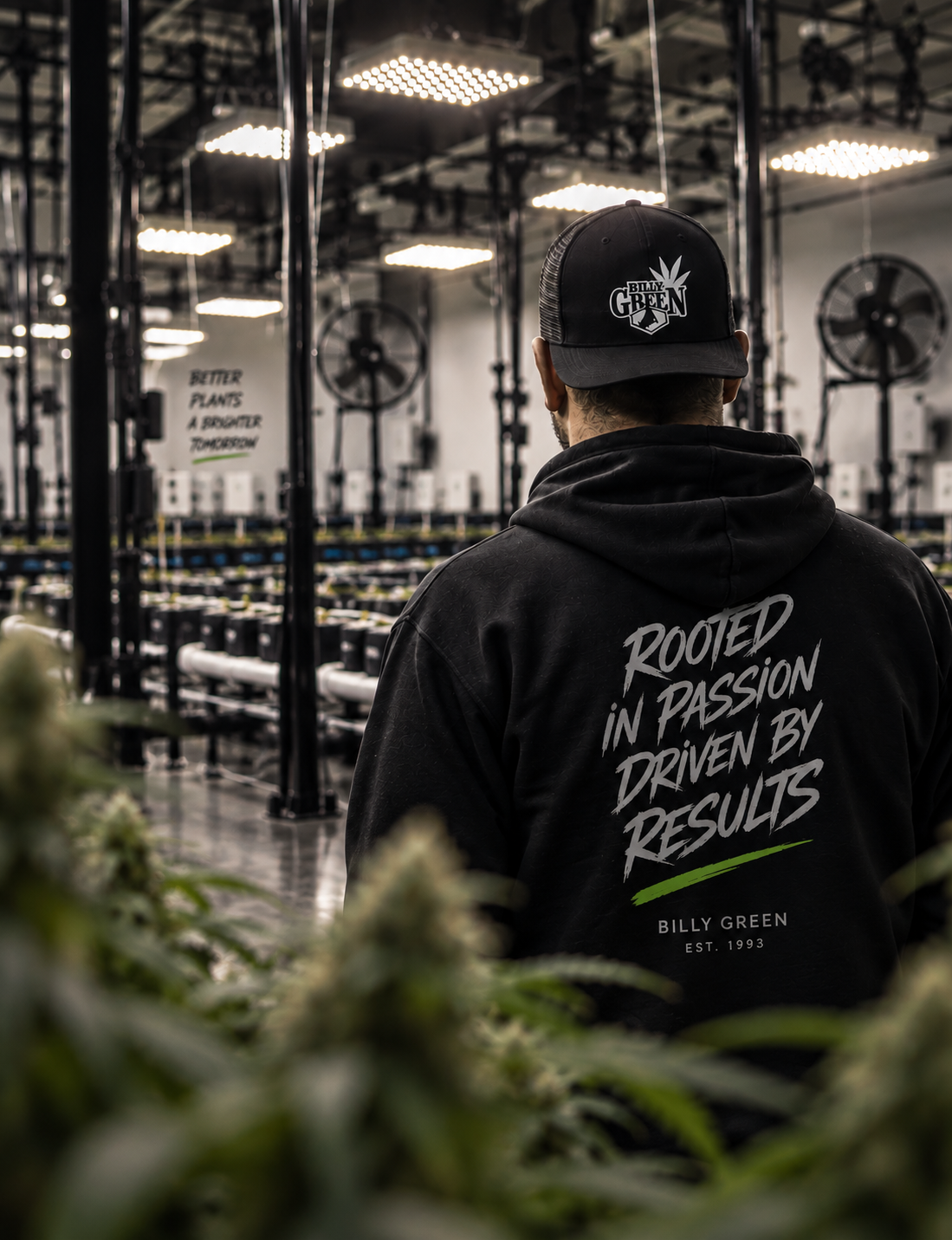
I’m Billy. I’ve been growing cannabis indoors since 1993, and I still get excited walking into a room full of plants. Put a new cultivar in there, or a phenotype I haven’t seen before, and you’ll probably find me taking a closer look, thinking, “All right, what have we got here?”
I want to know how it grows, what it responds to and whether it’s one I’ll want to keep around for years. After more than three decades, I still love that feeling of finding something worth getting excited about.
Today, I’m a grower, consultant and the creator of Billy Green Master Control. All three come from the same curiosity: I want to understand what’s happening, find ways to improve it and share what I learn with people who can use it.
I’ve learned a hell of a lot, and some of the lessons were expensive.
I started in houses and eventually moved into warehouse gardens with hundreds of lights. Over the years, I’ve worked with different substrates, growing systems and nutrient programs.
I’ve grown crops I’m incredibly proud of, and I’ve lost entire gardens. I’ve dealt with irrigation failures, environmental problems, pests, disease and equipment that let me down. I’ve also made decisions that turned out to be completely wrong.
Some of those lessons cost me a hell of a lot of money. When it’s your crop, your time and your money, you have a pretty good reason to understand what happened.
So I asked questions. I tried again. I paid attention to what the plants were telling me and worked out what I could change. A lot of what I bring into a grow room today came from those experiences.
In those earlier years, I supplied medicinal and compassion clubs. Knowing that something I grew could help somebody gave the work a purpose that stayed with me. I loved the plant, and I cared about the people it was reaching. That connection is still a big part of why I do this.
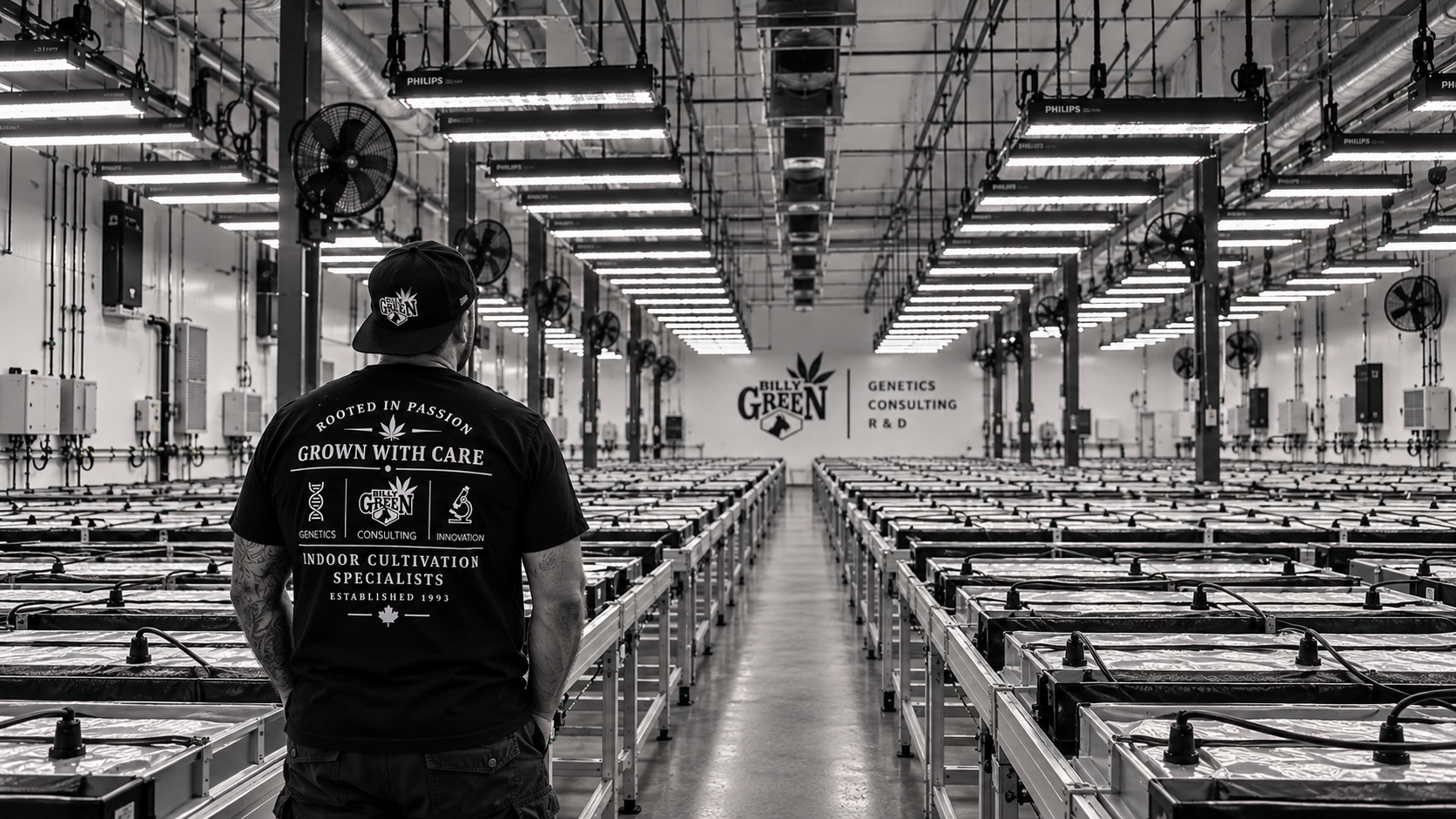
If you want to get me talking, ask me what I’m pheno hunting.
I love testing new cultivars. I’ve worked through thousands of plants, and finding one that stands out in my own room still gets me going.
The interesting part is getting to know it. How does it behave through a run? What brings out its best? Does it give me a reason to grow it again? Finding a promising plant is exciting, but understanding it takes time.
That’s why I put so much value on testing in my own environment. A cultivar that performs beautifully in somebody else’s room can respond differently in mine. Plants growing beside each other can react differently to the same irrigation, nutrition and conditions.
Those differences matter to me. I want to understand them well enough to make thoughtful decisions for each cultivar, and I want to remember more than whether the last crop was good.
I want to know what I did, what the plants experienced and what I learned that’s worth taking into the next run.
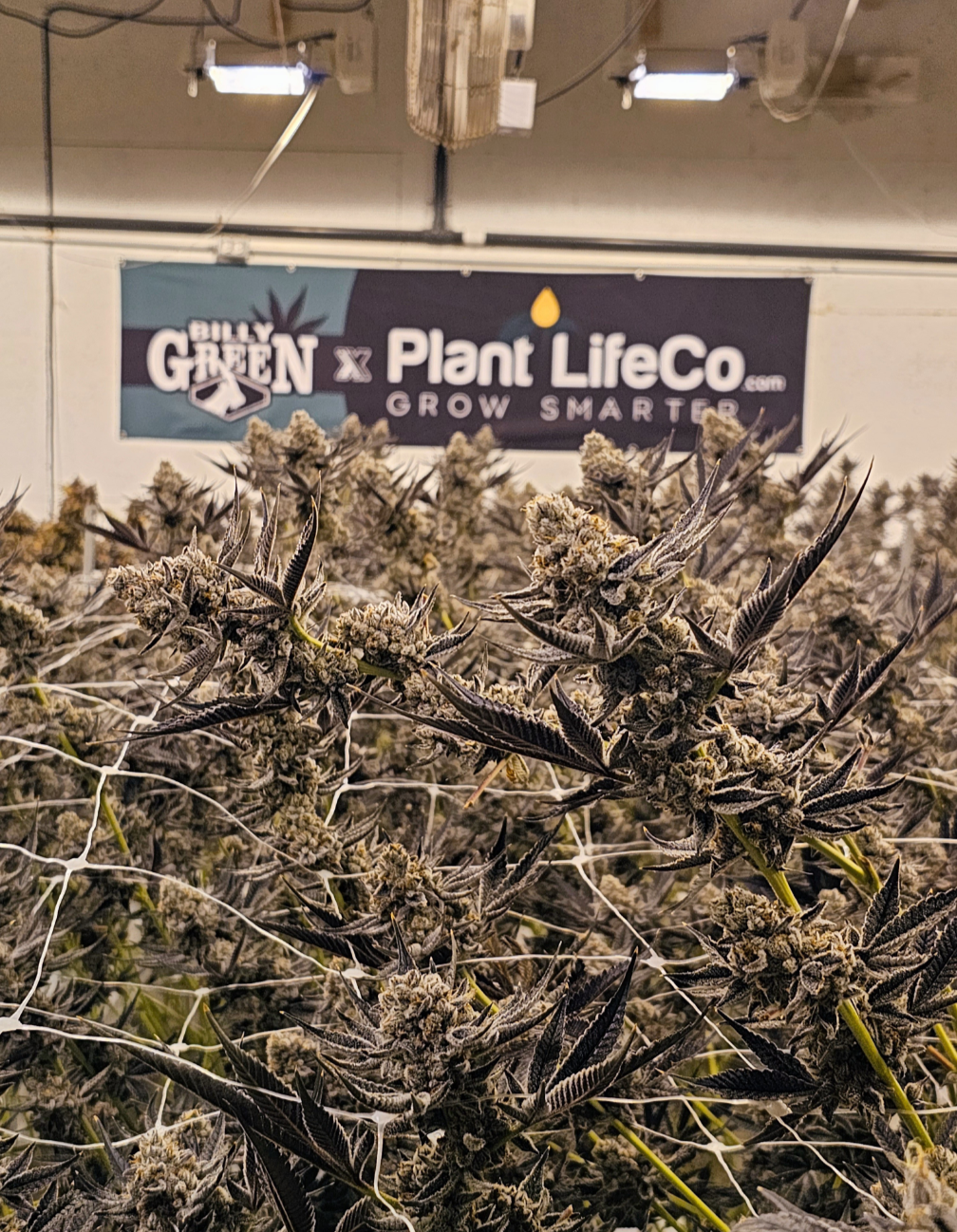
Technology has always been another passion of mine.
I love computers. I’ve built them, worked with programming, created websites and spent countless hours learning new software. I’ve worked with Photoshop and done video and audio editing at a professional level.
I get into this stuff because I enjoy it. Give me an interesting project and the chance to see what I can make it do, and I’m happy.
Meanwhile, in the grow room, years of useful information were ending up in binders, handwritten notes and my own memory. Sometimes I couldn’t even read my own chicken scratch. That’s not much of a record if the guy who wrote it can’t figure out what it says.
I could see how much growing and technology had to offer each other. My observations would mean more if I could connect them with the environment, irrigation and cultivar involved, then look back and make sense of the results.
I built Master Control because I wanted a better way, and I needed it to be affordable.
I was frustrated with platforms that expected me to buy more of their hardware than I needed, or could afford, just to get access. I already had equipment. I wanted to make better use of it, and I wanted useful information without an investment I couldn’t justify.
Eventually, I thought, “Fuck it. I’m going to build it myself.” That became Billy Green Master Control.
I built it with cultivars at the centre because that’s how I think about my grow. I wanted to bring together the plant, its environment, its irrigation and the response I could see. Environmental and irrigation recipes, or playbooks, were part of that vision: a way to organize what I was trying and carry useful lessons from one crop into the next.
Master Control brings my growing experience and my love of technology into the same project. I use it in my own grow, and I keep developing it as I work through the things I want to understand and improve.
The cost matters because I’m paying for those decisions myself. I know what it feels like to see something useful and struggle to afford it.
That’s why, when I look at another facility, I start with what’s already there. If an upgrade can help, I want to understand what it will do for the grow and whether the expense makes sense. I know how hard you have to work for that money.
I love getting into the details, and I love the people I get to do it with.
If we meet, you’ll probably figure out pretty quickly that I’m a people person. I like hearing how other growers work, what they’re excited about and what’s giving them a hard time. I’m just as interested in a good conversation as I am in a good technical problem.
My years building and renovating homes also shape how I look at a facility. I pay attention to how the space works, how the equipment fits together and how the team gets through the day. Those details affect both the crop and the people looking after it.
When I consult, I bring that whole picture with me. We look at the plants, the room, the workflow and what you’re trying to achieve. I can help your team understand the information they’re collecting and use it to make decisions. With a connected Master Control setup, I can also stay involved remotely, review crop response with you and help refine the approach as we learn.
And I know the value of bringing in somebody with experience beyond my own. I’ve built relationships with people I respect, and I’m happy to bring the right expertise into the conversation when a project calls for it.
I’m excited to see what we can do together.
I’ve been fortunate to have people believe in me and help me along the way. You don’t forget that, and it’s a big part of why I want to do the same for somebody else.
I’m excited to share what I’ve learned, help people get more from their grow and put useful tools within reach. I want the people I work with to understand their plants better and feel more confident in the decisions they’re making.
And I know I’ll learn plenty along the way, too. Another room, another grower or another cultivar can give you something you hadn’t thought about.
If you’d like to show me what you’re working on, or talk about where you want to take it, I’d love to hear from you.
Together, we’re better.